
Sandless Sandbags: A Florida Homeowner’s Guide to Flood Protection Without the Mess
If you’ve ever tried to fill fifty pounds of wet sand into a burlap bag two hours before a tropical storm hits, you already know why sandless sandbags have become the go-to flood protection product for Florida homeowners and businesses. No shovel, no truck bed full of sand, no aching back the morning after. Just water, a few minutes, and a barrier that actually holds.
Sandless sandbags sometimes called sandless flood bags or absorbent sand-free flood sack kits use a super-absorbent core instead of sand. Submerge them in water, let them expand, and they form a dense, flexible barrier that redirects or blocks incoming water at doorways, garages, storm drains, and low-lying entry points. For Southwest Florida residents who deal with heavy rain events and hurricane storm surge on a yearly basis, they’ve become a practical replacement for the old-fashioned sandbag pile.
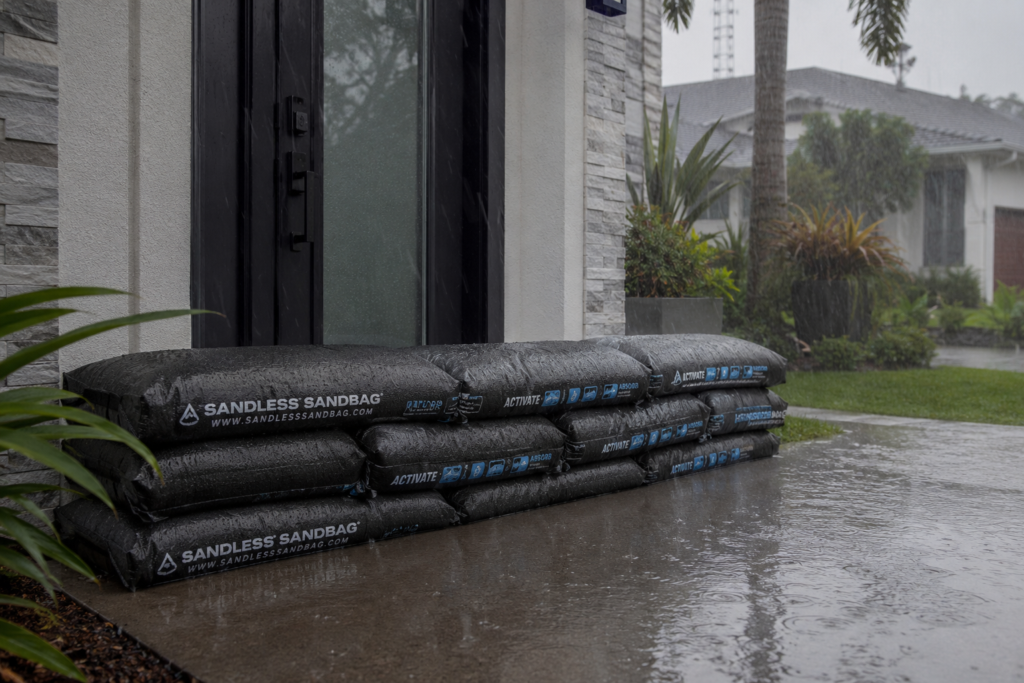
This guide breaks down exactly how sandless sandbags work, how they compare to traditional sandbags, what to look for before you buy, and where they perform best around a home, rental property, or storefront. Whether you’re comparing options online or checking a local storm depot, you’ll walk away knowing exactly what separates a genuinely effective flood bag from a bag that just sits there and looks the part.
What Are Sandless Sandbags?
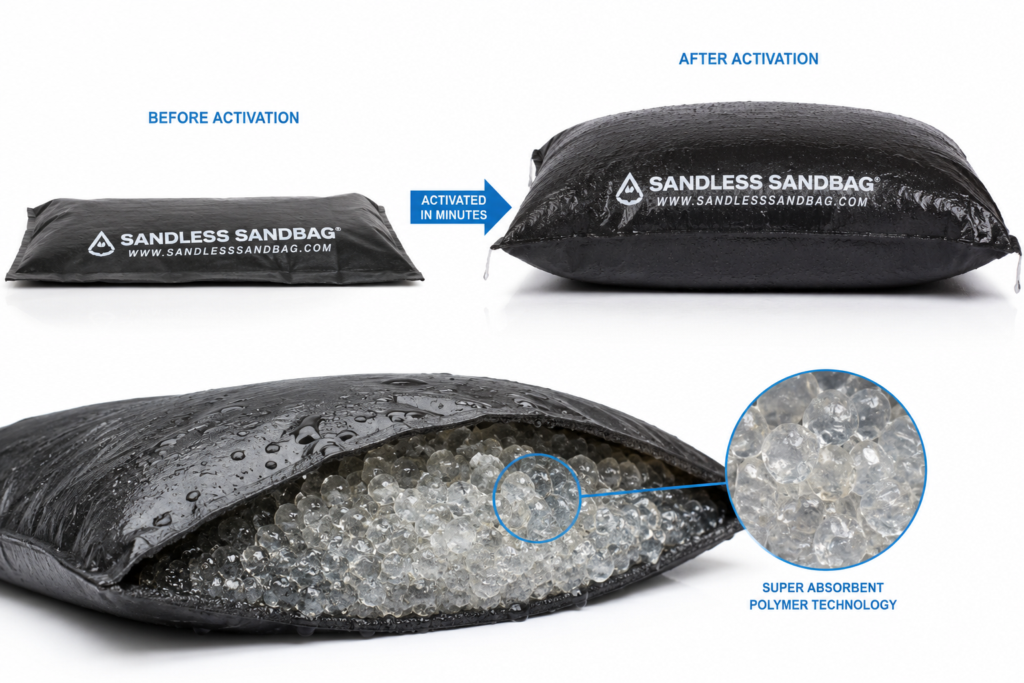
Sandless sandbags are flood barrier bags filled with a dry, lightweight polymer instead of sand. The bags themselves are typically made of a woven or non-woven fabric that lets water pass through while the polymer inside absorbs it and swells. Within a few minutes of contact with water, a flat, empty-looking bag becomes a firm, heavy barrier weighing anywhere from 20 to 40 pounds, depending on the size and brand.
Because the bags ship flat and dry, a case of sandless sandbags takes up a fraction of the storage space that traditional sand bags require, and there’s no sand to source, haul, or clean up once the storm passes.
How They Differ From a Bag of Sand
A traditional sandbag is exactly what it sounds like: burlap, poly, or canvas filled by hand with sand from a pile, a hardware store bin, or a county distribution site. It works, but it requires labor, transportation, and a place to dump the sand afterward usually your yard, where it sits until the next storm or gets hauled away.
Sandless sandbags remove almost every one of those steps. You store them dry, activate them with water on demand, and dispose of or reuse them without leaving pounds of sand behind.
How Sandless Sandbags Work
Super-Absorbent Polymer Technology
The core of a sandless sandbag is a superabsorbent polymer (SAP), the same category of material used in items like diapers and gardening water-retention crystals, scaled up for flood control. When the polymer contacts water, it absorbs many times its own weight and forms a firm, gel-like mass inside the bag’s fabric shell. That gel is what gives the bag its structure and weight once activated not sand, not gravel, just water locked into a solid form.
Setup Time and Expansion
Most sandless flood bags reach full expansion within 3 to 5 minutes when fully submerged, and continue firming up over the following hour. Some kits are designed to be soaked in a bucket or kiddie pool before placement; others can be laid directly across a doorway and hosed down in place. Either method is dramatically faster than shoveling and tying off traditional sandbags one at a time.
Sandless Sandbags vs Traditional Sandbags
| Feature | Sandless Sandbags | Traditional Sandbags |
|---|---|---|
| Setup time | 3–5 minutes to activate | 15–20 minutes per bag to fill and tie |
| Weight before use | 1–2 lbs (dry, flat) | 30–40 lbs (pre-filled with sand) |
| Weight after activation | 20–40 lbs (water-absorbed) | Same as filled weight |
| Materials required | Water only | Sand, shovel, ties, labor |
| Storage space | Small — stacks flat in a closet or garage shelf | Large — requires pallets or bulk sand storage |
| Cleanup after storm | Dries out, dispose of or store for reuse | Wet sand must be bagged, hauled, or dumped |
| Reusability | Some models reusable 2–3 times after drying | Bags degrade; sand can sometimes be reused |
| Shelf life (unused) | 3–5 years typical, stored dry | Indefinite, but sand must be pre-sourced |
| Mess factor | Minimal — no loose sand tracked indoors | High — sand spreads, stains, and clogs drains |
| Best for | Quick deployment, rentals, storage-limited homes | Permanent barriers, large-scale flood walls |
Benefits of Switching to Sandless Flood Bags
The appeal of sandless sandbags isn’t just convenience it’s that they solve several problems traditional sand bags create in the first place.
For Homeowners
- No sand to buy, haul, or store between storms
- Compact enough to keep a full hurricane sandbag kit in a hall closet
- Lightweight until activated, making them easier for one person to place around a garage or front door
- No sand residue tracked into the house or left staining a driveway
- Works well as a fast response product when a storm intensifies with little notice
For Business Owners and Property Managers
- Faster to deploy across multiple storefronts or rental units before a storm watch becomes a warning
- Easier to store in bulk at a commercial property without a sand pile taking up parking or loading space
- Lower labor cost since staff aren’t spending hours filling bags by hand
- A practical addition to a broader emergency supplies for a hurricane plan across several properties at once
Buying Guide: How to Choose the Right Sandless Flood Bags
Not every sandless sand bag on the market performs the same way. A few things separate a bag that holds a real flood line from one that underperforms during an actual storm.
Absorption Capacity and Bag Size
Look at how much water a single bag is rated to absorb and how much it weighs once fully expanded. A bag that only reaches 15–20 pounds won’t hold a line against moving water the way a 30–40 pound bag will. For doorways and garage openings, prioritize bags on the heavier end of that range.
Fabric and Durability
The outer shell matters as much as the polymer inside. A tightly woven, UV-resistant fabric holds up better against sun exposure, foot traffic, and repeated handling. Cheaper, thin fabric can tear during placement, especially when bags are dragged into position rather than carried.
Kit Size for Your Property
A single-car garage door typically needs 4–6 bags to form a continuous barrier; a standard entry door needs 2–3. Businesses with wide storefront entrances or loading docks should plan for double that number, plus extras for storm drains or low points in a parking lot. It’s almost always better to buy slightly more than you think you’ll need running short mid-storm isn’t an option.
Storage Life Before Activation
Check the manufacturer’s stated shelf life for unactivated bags. Most sandless flood bags last several years if kept dry and out of direct sunlight, which makes them a reasonable one-time purchase rather than a yearly re-buy, unlike sand that has to be sourced fresh or protected from getting rained on before you even use it.
Common Mistakes to Avoid With Flood Bags
Even a good product underperforms if it’s used the wrong way. A few mistakes show up over and over during storm season:
- Waiting until the storm arrives to activate them. Bags need several minutes to fully expand, and doing that placement in driving rain and wind is far harder than doing it a day ahead when a watch is issued.
- Using too few bags per opening. A gap of even a few inches at the base of a door will let water through no matter how well the bags themselves perform.
- Stacking bags in a single layer against a door that swings outward. Water pressure can shift a thin single-row barrier; doubling up or staggering the bags creates a more stable wall.
- Storing bags somewhere damp. A basement or garage floor that gets humid can trigger early absorption, wasting bags before a storm even arrives.
- Assuming flood bags replace all other storm supplies. Flood bags manage water intrusion — they don’t address wind damage, power loss, or the need for emergency water and food, which still need to be part of a full hurricane preparedness kit.
Best Places to Use Sandless Sandbags Around Your Property
Doorways, Garage Entries, and Sliding Doors
These are the most common entry points for surface water during heavy rain or storm surge. Garage doors in particular sit low to the ground and rarely seal tightly, making them a priority spot for a bag line.
Basement and Crawl Space Window Wells
Low window wells collect runoff quickly, especially on properties with poor grading. A ring of sandless sandbags around the well opening keeps water from pooling against the glass or foundation seam.
Storefronts and Commercial Entrances
Retail entrances, especially those flush with a sidewalk or parking lot, are common flood points during tropical storms. Placing bags the evening before a storm arrives protects inventory and flooring without needing a maintenance crew on-site during the event itself.
Storm Drains and Low Points in the Yard
Redirecting water away from a foundation sometimes matters more than blocking a doorway outright. Bags placed near a clogged or overwhelmed storm drain, or across a low point where water naturally collects in a yard, can reduce how much reaches the house at all.
Maintenance and Storage Tips
- Store unused bags flat, in a sealed bin or their original packaging, away from moisture and direct sunlight.
- Check bags annually at the start of hurricane season for punctures or fabric wear.
- After a storm, let used bags dry fully in the sun before deciding whether to reuse or dispose of them some polymer cores can be reactivated, but performance typically decreases after the first use.
- Rinse bags used near saltwater intrusion to prevent long-term fabric degradation.
- Keep a small supply pre-positioned near the entry points you use most, rather than storing everything in one hard-to-reach spot.
Building Out Your Full Hurricane Preparedness Kit
Sandless sandbags solve one specific problem water intrusion but they’re one part of a larger plan. A complete approach to storm supplies also includes emergency water for drinking (a common guideline is at least one gallon per person, per day, for a minimum of three days), non-perishable food, a battery or fuel-powered generator for extended outages, flashlights, a first-aid kit, and a way to charge phones once the grid goes down.
If you’re building out a broader plan, it’s worth pairing your flood bags with a dedicated flood protection plan for your specific property, stocking emergency water ahead of the season rather than during a run on stores, looking into a generator sized for your home’s essential circuits, and starting from a complete hurricane preparedness kit checklist rather than buying supplies piecemeal as a storm approaches. Florida Storm Supplies carries all of these categories, so a homeowner can build a full plan in one order instead of five separate trips.
Frequently Asked Questions
1. What are sandless sandbags made of? They’re made of a woven or non-woven fabric shell filled with a dry super-absorbent polymer. The polymer absorbs water on contact and expands into a firm, gel-like mass that gives the bag its weight and shape.
2. How long do sandless sandbags take to activate? Most reach usable firmness within 3 to 5 minutes of full water contact, with continued firming over the following hour. Submerging them fully in a bucket or tub speeds this up compared to just hosing them down.
3. Are sandless sandbags reusable? Some can be dried out and reused two to three times, though absorption performance typically decreases with each cycle. Always check the manufacturer’s guidance, since reusability varies by product line.
4. How much water can one sandless sandbag absorb? It depends on the size, but most standard bags expand to a final weight of 20 to 40 pounds after full activation, which is comparable to or heavier than a traditional sandbag filled with sand.
5. Do sandless sandbags work as well as traditional sandbags? For most residential and commercial flood scenarios, yes. They perform similarly at blocking or redirecting shallow, slow-moving water. For large-scale, long-duration flood walls, traditional sandbags or engineered barriers are still typically used.
6. How many sandless sandbags do I need for my house? Plan on 4 to 6 bags per garage door, 2 to 3 per standard entry door, and additional bags for any basement window wells or low points around the foundation. Businesses with wide entrances should double these amounts.
7. Can sandless sandbags be used indoors? Yes. They’re often used indoors around interior doorways, under appliances at risk of water intrusion, or along basement stairwells, since they don’t leave loose sand behind the way traditional bags do.
8. How long can I store sandless sandbags before I need them? Most manufacturers rate unactivated bags for 3 to 5 years of shelf life when stored dry and out of direct sunlight, making them a practical purchase well ahead of hurricane season.
9. Are sandless sandbags safe for pets and children? The polymer used is generally non-toxic, similar to materials used in common household absorbent products, but bags should still be kept away from curious pets or small children before and during activation, since a punctured bag can create a slippery mess.
10. Where should I buy sandless sandbags in Florida? Look for a supplier that specializes in storm supplies and can confirm absorption capacity, fabric quality, and shelf life rather than a generic retailer carrying a single unlisted brand. Florida Storm Supplies stocks flood bags sized for both homes and businesses across Southwest Florida.
Conclusion
Sandless sandbags exist because the old way of doing flood protection shoveling sand into burlap the night before a storm doesn’t hold up against how often Florida homeowners actually need to use it. They store easier, deploy faster, and leave a lot less mess behind once the water recedes. Used correctly, and as one part of a broader hurricane preparedness plan, they’re one of the simplest upgrades a homeowner, landlord, or business owner can make before the next storm watch goes up.
Ready before the next storm gets a name. Browse Florida Storm Supplies‘ full lineup of sandless sandbags, flood protection products, and hurricane preparedness kits, and get your property covered before the forecast changes.