
Introduction
Most Florida households own some version of a hurricane emergency kit a tote in the garage with a flashlight, a few water bottles, and a first aid box that hasn’t been checked since last season. The problem isn’t that people don’t have supplies. It’s that the supplies are scattered, half-expired, or built for a household that no longer matches who actually lives there now.
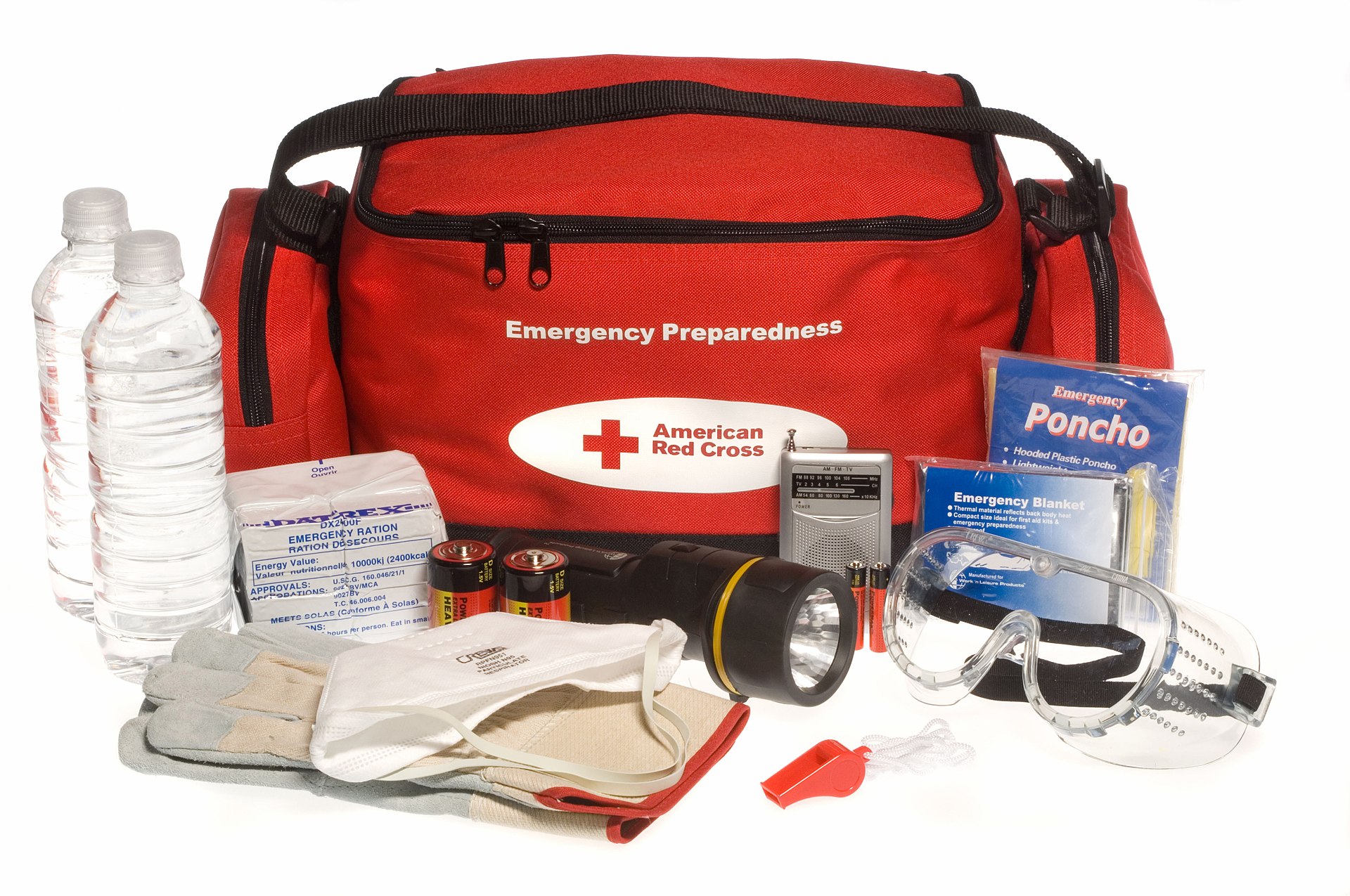
A well-organized emergency kit sorts supplies by category so you can find what you need in the dark.
An emergency kit for hurricane season isn’t a one-time purchase. It’s a system: the right items, sorted into categories you can find in the dark, sized for your specific household, and checked on a schedule so nothing quietly expires between June and November. This guide walks through what to pack, how to organize it so it’s actually usable during a power outage, how to adjust it for kids, seniors, pets, and medical needs, and how to keep it current through six months of hurricane season instead of just the week before a storm.
Table of Contents
- What Should Be in an Emergency Kit for Hurricane Season?
- Complete Hurricane Emergency Kit Checklist
- How Much Water and Food Should You Store?
- Emergency Kit for Different Household Needs
- Hurricane Emergency Kit vs. Tropical Storm Emergency Kit
- Portable Kit vs. Home Emergency Supplies
- Hurricane Preparation Timeline
- Kit Comparison Table
- Common Mistakes to Avoid
- Expert Tips
- FAQ
What Should Be in an Emergency Kit for Hurricane Season?
A complete hurricane survival kit covers six basic needs: hydration, nutrition, light and power, communication, first aid, and sanitation plus whatever your household specifically requires beyond that baseline. The mistake most guides make is listing 60 items in one long block. In practice, a kit only works if it’s organized into categories you can grab by function, because during an outage you’re not reading a list you’re reaching for “the medication bag” or “the flashlight bin” in the dark.
Think of your kit less as a single box and more as a labeled system: a few clear bins or duffer bags, each holding one category, stored together in a cool, dry, easy-to-reach spot not the attic, which traps heat, and not a spot that floods first if water intrudes.
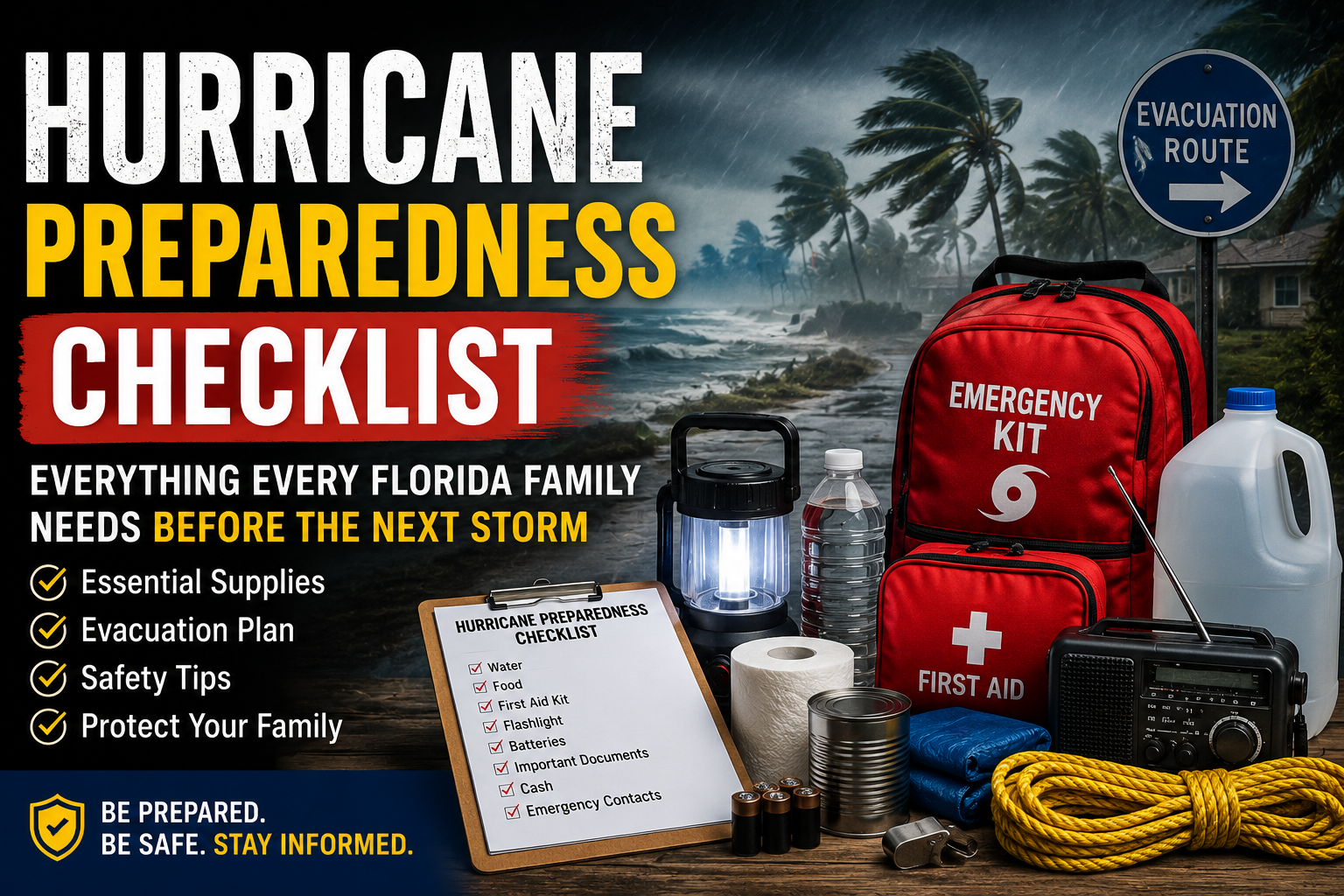
Complete Hurricane Emergency Kit Checklist
Water
- Bottled or stored water (see quantities below)
- Water purification tablets or a portable filter as backup
Food
- Non-perishable, ready-to-eat items (canned goods, dehydrated meals, nut butters, granola bars)
- Manual can opener
- Disposable plates, cups, and utensils to conserve water
First Aid
- Bandages, gauze, antiseptic wipes, antibiotic ointment
- Pain relievers and allergy medication
- Tweezers, scissors, digital thermometer
Medications
- At least a 7–14 day supply of prescription medications
- A written list of dosages, prescribing doctors, and pharmacy contact info
Lighting
- Flashlights (one per person, plus a headlamp for hands-free use)
- Extra batteries or a hand-crank/solar option
- Battery-powered lanterns for shared spaces
Communication
- NOAA weather radio (battery or hand-crank)
- Fully charged portable power banks
- A written list of emergency contacts, since phones may not hold a charge
Power
- Portable power bank or solar charger
- Extra batteries in multiple sizes
- Car phone charger
Sanitation
- Hand sanitizer, disinfecting wipes, moist towelettes
- Toilet paper and feminine hygiene products
- Heavy-duty trash bags and a bucket with a lid for makeshift sanitation if needed
Clothing
- One full change of clothing and closed-toe shoes per person
- Rain ponchos and a lightweight jacket
Documents
- Copies of ID, insurance policies, and medical records in a waterproof pouch
- A digital backup saved to cloud storage or a USB drive
Cash
- Small bills, since ATMs and card readers may be down
Tools
- Multi-tool or basic toolkit, duct tape, work gloves
- Whistle to signal for help
Pet Supplies
- Food, water, medications, leash, and a recent photo in case you’re separated
Baby and Child Supplies
- Formula, diapers, wipes, and a comfort item
Senior-Specific Supplies
- Mobility aids, hearing aid batteries, and any assistive devices they rely on daily
How Much Water and Food Should You Store?
Water is the single most important supply in any storm emergency kit, and it’s also the most commonly under-stocked. FEMA and Ready.gov set the baseline at one gallon per person, per day, covering both drinking and basic sanitation and recommend at least a three-day supply for a portable kit, with two weeks recommended for home storage if a major storm is expected to disrupt utilities.
Run the math for your household before the calculations feel abstract. A family of four needs roughly 12 gallons for a three-day minimum, and closer to 56 gallons for a two-week home supply. Store water in sealed, food-grade containers, out of direct sunlight, and rotate it roughly once a year. Before a storm arrives, many Florida households also fill bathtubs and large clean containers with extra water for flushing and cleaning that water doesn’t need to be drinking-quality, so it doesn’t count against your stored gallons.
For food, aim for the same three-day minimum for a grab-and-go kit and up to two weeks for home supply. Choose items your family will actually eat, since food that gets ignored for a year and then thrown out isn’t preparedness it’s waste. Canned proteins, shelf-stable milk, peanut butter, crackers, and dried fruit cover most nutritional bases without requiring refrigeration or much prep.
Emergency Kit for Different Household Needs
A generic kit gets you most of the way there, but the last 10% the part that actually matters when the power is out comes from customizing it to who lives in your home.
Families
Build in age-appropriate comfort items (books, cards, a favorite stuffed animal) to help kids stay calm during long outages, and involve older children in checking and restocking the kit so they know where supplies are kept.
Seniors
Keep a written medication schedule, spare eyeglasses, hearing aid batteries, and any mobility equipment charged or fueled. If a senior lives alone, make sure at least one family member or neighbor knows their kit location and any daily assistance needs.
Families With Babies or Young Children
Pack more formula and diapers than you think you’ll need, store them in sealed waterproof bags, and include a change of clothes sized up, since growth doesn’t pause for storm season.
Pet Owners
Include enough pet food and water for the same duration as your household supply, a carrier or crate for evacuation, and updated ID tags many shelters require proof of vaccination, so keep those records with your kit.
People With Medical Needs
If you rely on refrigerated medication, a CPAP machine, or other powered medical equipment, plan a backup power source and talk to your utility provider or local emergency management office about registering as a household with medical needs before hurricane season starts.
Apartments/Condos
Storage space is limited, so prioritize a compact go-bag over bulk home storage, know your building’s designated shelter-in-place area, and keep supplies off the floor in case of water intrusion from upper floors or windows.
Businesses
A business kit should cover employees for a full workday: water, basic first aid, a battery radio, and a plan for securing data and equipment. Keep a physical, non-digital copy of emergency contacts and insurance information, since a power outage can take down cloud access along with everything else.
Hurricane Emergency Kit vs. Tropical Storm Emergency Kit
The core supplies don’t change much between the two water, food, light, first aid, and communication matter regardless of a storm’s official classification. What tends to shift is duration and intensity of impact. Tropical storms often bring heavy rain and flooding with shorter-lived power disruptions, while hurricanes, particularly Category 2 and above, are more likely to cause extended outages and structural damage that keep a household relying on stored supplies for a longer stretch.
Practically, that means the same kit works for both, but a hurricane season kit should be built around the higher-end scenario enough supplies for a week or more rather than assembled fresh every time a storm’s category changes. It’s easier to have one well-stocked kit than to try to guess in advance how strong a given system will be.
Portable Kit vs. Home Emergency Supplies
Most households actually need supplies staged in three places, not one.
Grab-and-go kit: A backpack or duffer with 72 hours of essentials water, food, medications, documents, a phone charger that any family member could carry out the door in under five minutes if evacuation is ordered.
Home supply storage: The larger reserve of water, food, and sanitation items meant to last one to two weeks if you shelter in place and utilities go down.
Vehicle kit: A smaller kit kept in the car in case you’re away from home when a storm develops or you’re stuck in evacuation traffic water, snacks, a flashlight, a phone charger, and a basic first aid kit.
Splitting supplies this way means you’re never caught with everything in one place you can’t reach, whether that’s because you evacuated without your home stock or you’re stranded in a vehicle without your go-bag.
Hurricane Preparation Timeline
Before Hurricane Season (well before June 1): Inventory what you already have, replace expired batteries and medications, and build your kit gradually rather than all at once.
7 Days Before a Storm: Check the storm’s projected path, top off water and non-perishable food to your full target quantity, and confirm medications are current.
3 Days Before: Charge all power banks and devices, fuel your vehicle, secure outdoor items, and review your evacuation route if you’re in a evacuation zone.
24 Hours Before: Fill bathtubs and extra containers with water for sanitation, confirm your kit is in an accessible, elevated location, and finalize your family communication plan.
During the Storm: Stay away from windows, remain in your designated safe room, and monitor the National Hurricane Center or a battery-powered NOAA radio rather than relying on cell service, which may be unreliable.
After the Storm: Avoid floodwater and downed power lines, use generators outdoors only, and document any property damage with photos before cleanup begins.
Kit Comparison Table
| Supply Category | Basic Kit (1 Person, 3 Days) | Family Kit (4 People, 1 Week) | Extended Home Supply (4 People, 2 Weeks) |
|---|---|---|---|
| Water | 3 gallons | 28 gallons | 56 gallons |
| Food | 3-day non-perishable supply | 7-day supply per person | 14-day supply per person |
| First Aid | Basic kit | Family-size kit | Family kit + extra medications |
| Lighting | 1 flashlight, spare batteries | 1 flashlight per person + lantern | Above, plus solar charging option |
| Communication | Battery radio | NOAA radio + power bank | Above, plus backup power source |
| Sanitation | Small hygiene kit | Family hygiene supplies | Extended sanitation supplies (bucket, bags) |
| Documents | Copies in waterproof pouch | Family document set | Above, plus digital backups |
Common Mistakes to Avoid
- Storing the kit somewhere hard to reach in the dark like a high shelf in the garage instead of a spot every family member can find without a flashlight.
- Buying an all-in-one bucket kit and stopping there. Pre-made kits are a good starting point, but they rarely account for your household’s medications, pet needs, or number of people.
- Letting batteries and medications expire unnoticed because the kit only gets opened once a year, right before a storm.
- Underestimating water needs by packing a few bottles instead of calculating gallons per person per day.
- Forgetting a manual can opener a small item that makes an entire shelf of canned food inaccessible without it.
- Skipping a vehicle kit and assuming the home kit will always be reachable, even if a storm hits while you’re out.
- Not customizing for household changes, like a new baby, a pet, or a family member’s new medication, since a kit built two years ago may no longer match who actually lives in the house.
- Storing everything in one container, so a single flooded closet takes out your entire supply at once.
Expert Tips
- Build your kit gradually by adding one or two items to your regular grocery trip each week rather than trying to buy everything at once in late May.
- Label expiration dates directly on the outside of bins so you can scan for problems in seconds instead of unpacking everything.
- Practice the “eat what you store, store what you eat” approach for food rotate stock into everyday meals and replace it, so nothing sits untouched and forgotten.
- Photograph the inside of each bin and keep the photo on your phone, so you can quickly confirm what you have without physically digging through it.
- Set a recurring reminder for the start and midpoint of hurricane season to review your kit, not just the week a storm is forecast.
FAQ
How often should I check my hurricane emergency kit? At least twice during hurricane season once before June 1 and again around the season’s midpoint plus anytime your household situation changes.
What’s the difference between a hurricane emergency kit and a general disaster kit? The core supplies overlap heavily, but a hurricane-specific kit should account for extended power outages and flooding risk, which are the most common hurricane-related disruptions in Florida.
Do I need a separate kit for each family member? Not entirely most supplies can be shared from one central kit, but each person should have their own go-bag with essential personal items like medications and a change of clothes.
How much does a basic hurricane preparedness kit cost to build? Costs vary widely depending on what you already own, but building gradually over several weeks is typically more affordable than buying everything at once right before a storm.
Can I use bottled water I already have at home instead of buying special “emergency” water? Yes any sealed, food-grade bottled water works. What matters is quantity and rotation, not the label.
Should renters and apartment residents build the same kit as homeowners? The core supplies are the same, but apartment residents should prioritize a compact, portable kit over bulk home storage, given limited space.
What should I do with expired kit items? Replace medications and batteries immediately, and rotate expiring food into regular meals before it goes to waste, replacing it with fresh stock.
Is a generator considered part of a hurricane emergency kit? It can be a valuable addition for extended outages, but it should always be run outdoors, well away from windows and doors, due to carbon monoxide risk.
How do I prepare an emergency kit if I have a chronic medical condition? Talk with your doctor about a backup medication supply, keep written dosage instructions with your kit, and consider registering with your local emergency management office if you depend on powered medical equipment.
What’s the single most important item to prioritize if I’m starting from scratch? Water. It’s the resource with the shortest survival window if it runs out, and the one most households underestimate.
Ready to Fill the Gaps in Your Kit?
Building a complete emergency kit for hurricane season takes time, and most households are missing at least a few items once they actually check. If you’re still rounding out your supplies, Florida Storm Supply’s emergency preparedness products can help you fill in the gaps based on your household’s specific needs whether that’s water storage, first aid essentials, or backup power.